
Every leader I know has a crisis story. Mine started early and never really stopped, across factory floors, combat zones, and corporate programs. The settings changed. The lessons did not. Here are the three I keep coming back to after more than 30 years in supply chain and operations.
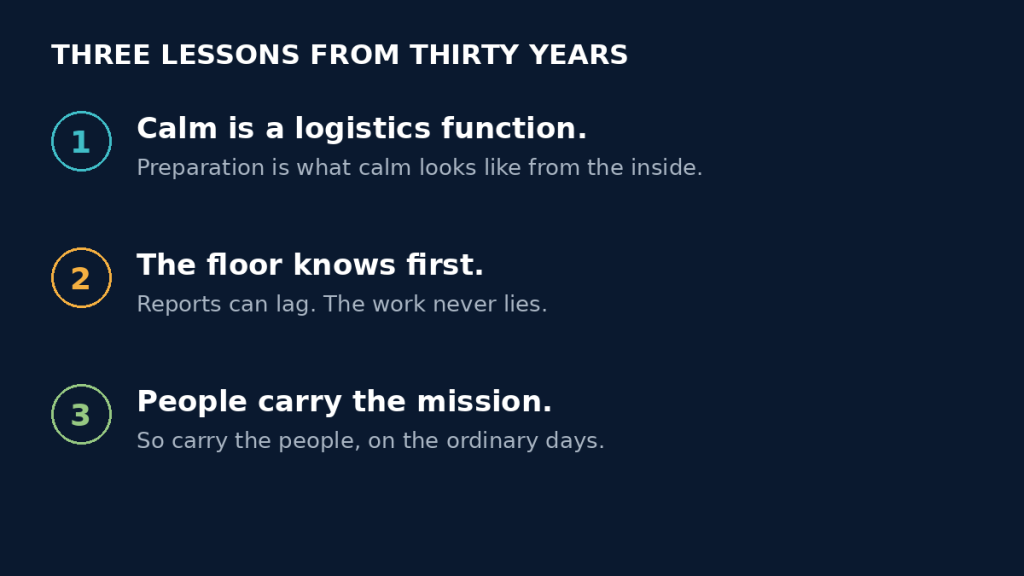
Lesson one: calm is a logistics function. In Iraq and Afghanistan, I ran logistics and laboratory infrastructure support where the supply line was contested and the timeline was not negotiable. We sustained 100% mission readiness across $50M in forensic infrastructure, in an environment designed to interrupt us. That did not happen because we had a perfect plan. It happened because the team had rehearsed the imperfect days, knew who decided what when communications failed, and trusted the rhythm we had built before anything went wrong. Calm is not a personality trait. It is what preparation feels like from the inside.
Lesson two: the numbers on the floor never lie, but reports can. At John Deere Dubuque Works, a 3.9 million square foot plant running three shifts, we raised on-time order fulfillment from 68% to 93%. The turnaround did not come from a new strategy deck. It came from walking the floor, finding where the plan and the work had quietly divorced each other, and fixing the handoffs nobody owned. Leaders who manage from reports alone are always the last to know. The floor knows first. Go there.
Lesson three: people carry the mission, so carry the people. I commanded a 1,500-person Combat Sustainment Support Battalion, and I have led civilian teams from 20 to several hundred since. The principle is identical in both worlds. In a crisis, people do not rise to the occasion. They fall back on how they have been led on the ordinary days: whether their leader told them the truth, shared credit, took blame, and developed them before they were needed. At BAE Systems, we lifted on-time delivery from 80% to 95% and cut equipment downtime 40%. The systems mattered. The reason the systems worked is that the team believed the effort would be noticed and the standard would be fair.
I consult and teach on supply chain risk now, and I still use these three lessons every week. Technology has changed the speed of the work, and recently I have added AI tools to my own workflows, always with a human making the final call. What has not changed is what a crisis asks of a leader: prepare before it arrives, go see the truth yourself, and take care of the people who will carry you through it.
My question for you: what is the leadership lesson a crisis taught you that no course or book ever did?
I will start: mine is that the plan is not the product. The rehearsed team is. Tell me yours in the comments, and follow along if you want more from thirty years of factory floors and forward operating bases.
Donna J. Broussard, PhD
Supply Chain & Operations Executive