The Geopolitical Landscape and Logistics
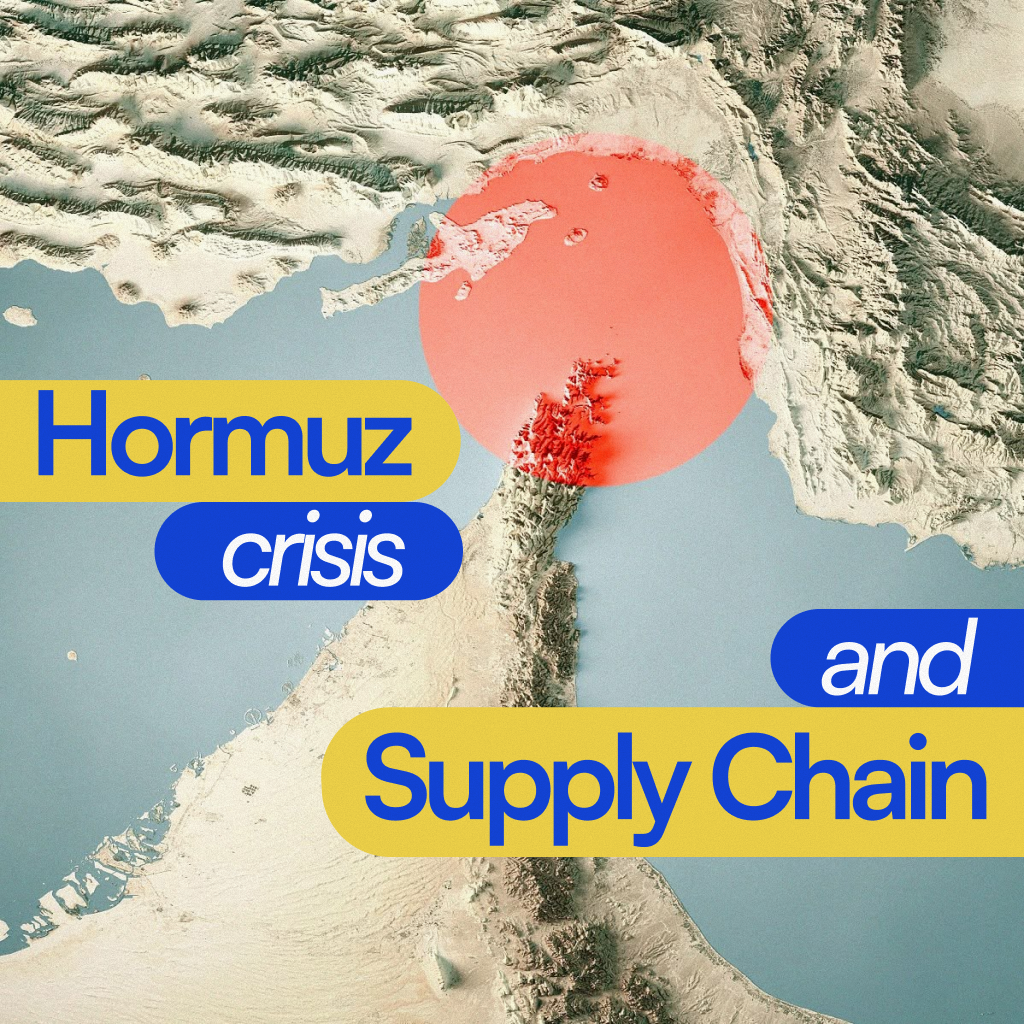
In a world of unprecedented and unexpected decisions and changes, the biggest shock the market has seen this year has been none other than the Hormuz crisis. Named after the god of order, Hormuz has, ironically, become one of the most critical and vulnerable chokepoints of global order. Giving passage to almost 30,000 vessels per year, the passage served as the main artery of global trade, and its obstruction has unveiled vulnerabilities of globalized production.
While the war might be local to the middle east, its effects ripple through the international market. The Hormuz contributes roughly 20-25 percent of global seaborne oil trade and about 25 percent of global Liquified Natural Gas. The closure undeniably affects other dependent industries including construction, agriculture, manufacturing, and the power sector as well.
The closure of Hormuz has also impacted the World Food Program’s humanitarian activity. Since the war broke out, 70,000 metric tons of food has been affected.
The Rerouting Reality: Transit Times and Delays
With this critical artery now severed, the lifeblood of global trade has been forced to find alternative, far more taxing pathways. As major carriers have suspended transit through the strait and its interconnected routes, the industry is pivoting towards the Cape of Good Hope.
This forced diversion is not merely a geographic detour; it is a profound structural shock to global shipping capacity. Rerouting around the African continent has effectively absorbed approximately 2.5 million TEUs (Twenty-foot Equivalent Units) of global vessel capacity almost overnight. For supply chain managers and procurement officers, this massive displacement of ships translates directly into agonizingly stretched timelines. Journeys connecting Asian manufacturing hubs to European markets are now enduring an additional 25 to 30 days in transit.
Naturally, this penalty carries an increased financial cost. As freight carriers burn excess fuel to cover the additional distance, supply chain costs have skyrocketed. Baseline shipping costs have already spiked by 15-20 percent. The supply chain model previously reliant on the predictable rhythm of the Hormuz is rapidly dissolving into a costly new reality, where geography dictates the bottom line.
Beyond Oil: The Hidden Casualties of the Blockade
The Hormuz is not just a chokepoint for oil; its blockage has triggered a domino effect across construction, manufacturing, agriculture, and semiconductor production.
Over 30 percent of world’s ammonia trade, about 50 percent of urea, and 20 percent of diammonium phosphate; all critical to fertilizer production, are transported through the strait. About 50 percent of global sulphur, an important component in metal processing, passes through the strait.
One-third of the world’s Helium, used in semiconductor manufacturing, also passes through the strait.
While the immediate effect is economic fallout and sky-high prices, the impact goes beyond just that. With the strait closed, the nitrogen supply chain stops, and almost half of the world relies on nitrogen fertilizer for food production.
The Insurance Crunch
The operational troubles of supply chain rerouting are only half the battle. As geopolitical uncertainty takes hold and the blockade persists, Protection and Indemnity clubs have been forced to withdraw standard war-risk insurance for vessels anywhere near the Persian Gulf.
Without this critical financial safety net, ocean carriers refuse to absorb this liability and instead pass the risk downstream through mandatory emergency conflict surcharges. Even if the strait had been physically clear, no commercial vessel could afford to sail through it. This insurance vacuum breaks the risk calculus of global logistics, forcing supply chain managers to either pay unreasonably high prices and risk sailing through the dangerous route, or swallow the massive operational costs and delays of the African detour.
The recent crisis has uncovered the fragility of globalized supply chains that rely heavily on select few points of transit. Although globalized supply chains and offshore production have helped in cost-saving, the supply chain landscape has shifted from a cost-effectiveness-first to an availability-first model. Supply chain networks that prioritize agility, resilience and sovereignty over cost savings have come out on top amidst the global crises.
Navigating the Hormuz closure demands more than just a simple detour, it demands a fundamental restructuring of your risk calculus. Get in contact with The Corporate Looking Glass’s supply chain experts today and make sure your network is built to survive global volatility.